

When travellers search for accommodation in Rwanda, they often compare several hotels before deciding where to stay. They want to see the rooms, understand the facilities, check the location, compare prices and know how to make a reservation.
For hotels, lodges, resorts and guesthouses, a professional website can make this decision easier.
However, having a website is not enough. A hotel website should provide useful information, create confidence and guide visitors towards making a booking or enquiry.
Whether you operate a hotel in Kigali, a lodge near one of Rwanda's national parks or a guesthouse in another part of the country, here are eight important features to consider when building or improving your website.
1. A professional homepage that communicates your hotel experience
Your homepage is often the first impression a potential guest gets of your property.
It should quickly communicate:
Your hotel's name and location.
The type of accommodation you offer.
Your most important facilities and services.
What makes your property worth considering.
How visitors can make a reservation.
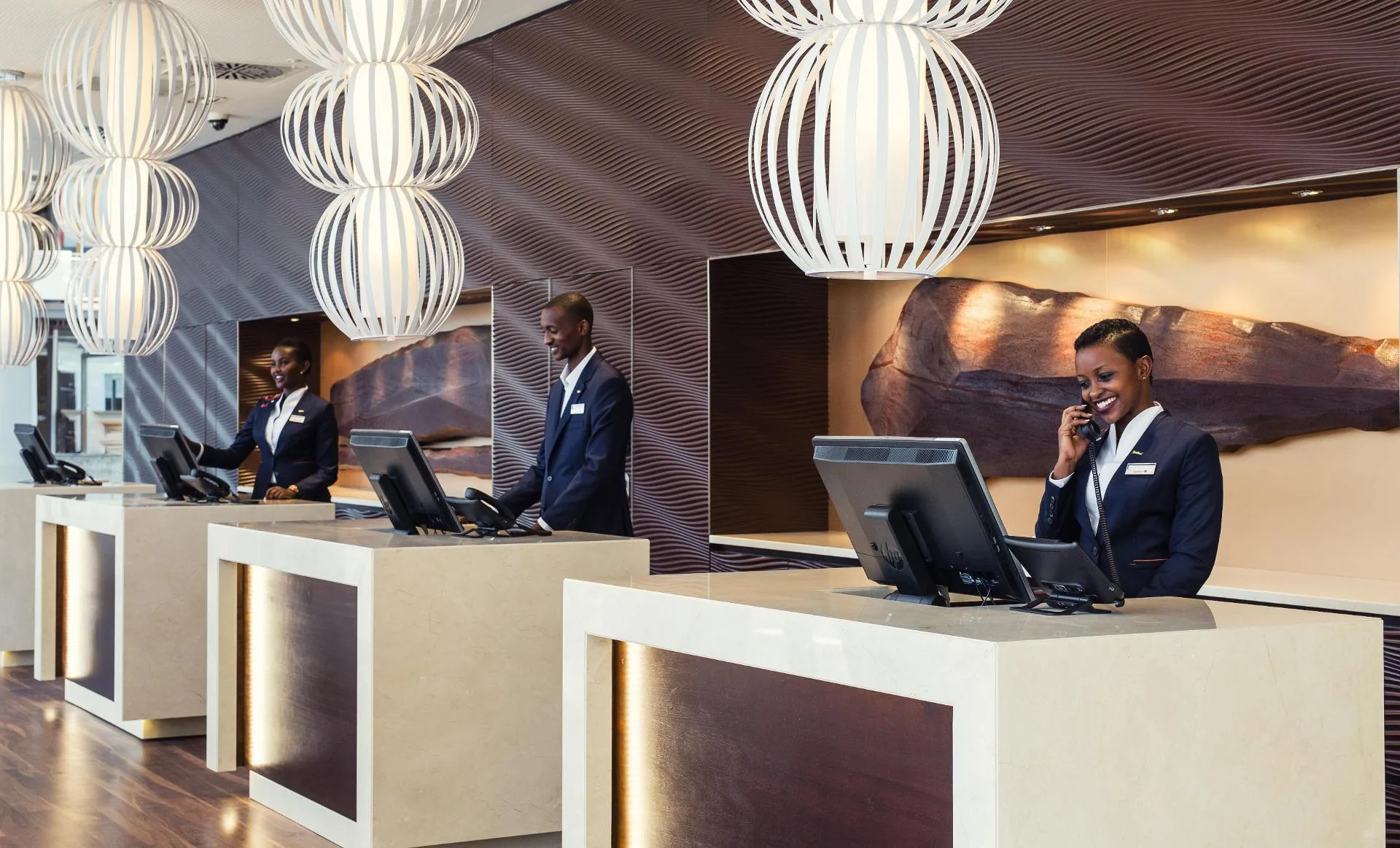
Use high-quality photographs that represent the actual property. A welcoming reception area, comfortable rooms, restaurant, swimming pool, gardens or surrounding scenery can help visitors understand the experience you provide.
Avoid filling the homepage with too much text. Use clear headings, attractive images and visible booking or enquiry buttons.
2. Detailed room pages with accurate information
Guests need to understand what they are paying for before making a reservation.
Instead of displaying all accommodation options on one page, consider creating a separate section for each room category.
Each room page should explain:
Room type and available occupancy.
Bed configuration.
Room size, where relevant.
Included facilities.
Available photographs.
Applicable rates or a way to request a quotation.
Reservation instructions.
For example, a hotel might offer Standard Rooms, Deluxe Rooms, Executive Suites and Family Rooms.
Clear descriptions help visitors select the accommodation that matches their needs and budget.
3. A simple and visible booking process
One of the most important purposes of a hotel website is to help visitors make reservations.
A guest who likes your hotel should not have to search through several pages to discover how to book.
Place clear calls to action such as:
Book a Room
Check Availability
Make a Reservation
Contact Reservations
Depending on the hotel's requirements, the website can include a booking form, an online booking engine or an enquiry process through WhatsApp and email.
A booking system may also allow guests to select dates, room types and the number of visitors before submitting a reservation.
The right solution depends on the hotel's size, booking process and operational requirements.
4. Clear information about facilities and services
Guests do not book rooms alone. They also consider the services and facilities available during their stay.
Create a dedicated section explaining what your hotel offers.
Possible categories include:
Restaurant and dining.
Conference and meeting facilities.
Swimming pool and fitness facilities.
Airport transfers.
Spa and wellness services.
Laundry services.
Event and wedding facilities.
Parking and internet access.
Only advertise facilities and services that your property actually provides. Accurate information helps manage guest expectations and builds credibility.
5. Location, directions and nearby attractions
Location can strongly influence accommodation decisions.
Your website should make it easy for visitors to understand where your hotel is located and how to reach it.
Include:
Complete physical address.
An embedded map or clear directions.
Contact information.
Nearby landmarks and attractions.
Information about transport or transfer arrangements, if available.
For hotels serving international visitors, useful directions can make the journey from the airport or another destination easier to plan.
6. Mobile-friendly design and fast loading speed
Many potential guests browse accommodation websites using smartphones.
If your website is difficult to navigate on a mobile phone, visitors may struggle to view photographs, read room descriptions or complete a reservation.
A modern hotel website should:
Adjust to phones, tablets and desktop computers.
Have readable text and clear navigation.
Use appropriately compressed images.
Display booking buttons prominently.
Keep forms simple.
Avoid unnecessary animations and heavy elements.
Performance matters because visitors may access your website using different devices and internet connections.
A website should be tested on real mobile devices before launch, not only viewed on a developer's computer.
7. Guest reviews, policies and contact information
Trust is important when someone is choosing accommodation, particularly when they are booking from another country.
Make it easy for visitors to find information that helps them make a confident decision.
Consider displaying:
Genuine guest testimonials.
Links to relevant review platforms.
Check-in and check-out times.
Cancellation policies.
Payment information.
Frequently asked questions.
Reservation and customer-support contacts.
Do not publish invented testimonials or misleading claims. Authentic information is more valuable than exaggerated marketing statements.
8. Connect your website with hotel management operations
A hotel website handles the presentation of your property and helps attract enquiries or reservations. But managing daily hotel operations requires more than a website.
Hotel management software can help organise activities such as:
Room and booking management.
Guest records.
Reservation tracking.
Daily operational activities.
Management reporting.
Where appropriate, the website and hotel management system can be designed to work together. For example, an online booking process may need to communicate with the hotel's room availability records.
However, this integration must be planned and developed according to the hotel's actual workflow. A website does not automatically synchronise with a management system simply because both are online.
At BrightLink Technologies Ltd, we also develop hotel management software designed to help organise bookings, rooms, guests and day-to-day hotel operations.
BrightLink Technologies+1
What should a hotel website project include?
Before hiring a website developer, prepare a list of what your hotel needs.
Website component | Purpose |
|---|---|
Homepage | Introduce the hotel and its experience |
About Us | Explain the hotel and its story |
Accommodation | Present room categories |
Facilities | Show available services |
Gallery | Display property photographs |
Location | Help visitors find the hotel |
Booking / Enquiry | Allow guests to make reservations |
Contact | Provide communication channels |
Policies and FAQs | Answer common guest questions |
Additional features such as online payments, multiple languages, promotional offers, booking-engine integration and management-system connections can be considered depending on your budget and business requirements.
How BrightLink Technologies Ltd can help your hotel
At BrightLink Technologies Ltd, we help businesses in Rwanda and beyond build practical digital solutions.
We understand that hotels need more than attractive designs. They need websites that communicate their services, present accommodation professionally and make it easy for potential guests to get in touch.
Our services include:
Professional hotel website development
We design responsive websites that present your hotel, rooms, facilities, location and services in a professional way.
Hotel Management Systems
We develop management software to help hotels organise bookings, rooms, guest information and daily operations.
Digital Marketing and SEO
We help businesses improve their online visibility through search engine optimisation, content and digital marketing strategies.
Our approach begins with understanding your hotel, your customers and your operational needs before recommending the appropriate solution.
Technology Solutions in Kigali, Rwanda+2
Learn more:
Conclusion
Your hotel website should be more than an online brochure. It should help potential guests discover your property, understand your accommodation options, explore your facilities and make reservations conveniently.
A professional design, accurate room information, clear booking options, mobile-friendly performance and reliable management processes can make a meaningful difference to the guest experience.
If your hotel is planning to build a new website or improve an existing one, now is a good time to review whether your digital presence supports your business goals.
Ready to give your hotel a professional online presence?
Contact BrightLink Technologies Ltd.
Website: brightlinkltd.com
Email: info@brightlinkltd.com
Phone: +250 782 567 921 / +250 795 263 269
Location: Kigali, Rwanda