


Introduction
Every growing business eventually reaches a point where managing operations with spreadsheets, paperwork, and disconnected applications becomes difficult.
You may need a system to manage inventory, track sales, organize employees, manage hotel reservations, monitor properties, or automate daily business activities.
At this point, custom software development becomes an important consideration.
However, one of the first questions most business owners ask is: How much does custom software development cost in Kigali, Rwanda?
The answer depends on what you want the software to accomplish, how complex the system is, the features required, and the technologies involved.
A simple business management tool and a fully integrated web or mobile application are two very different development projects.
In this guide, we explain the factors that influence software development costs in Rwanda, the services available, what to consider before hiring a software development company, and how to choose a solution that delivers long-term value to your business.
What Is Custom Software Development?
Custom software development is the process of designing, building, testing, and maintaining software specifically for a business, organization, or particular operational need.
Unlike ready-made software, which is designed for a broad market, custom software is developed around your organization's specific requirements.
For example:
A supermarket may need an inventory and sales management system.
A hotel may need a platform for reservations, room management, and billing.
A property management company may need software to track tenants, rental payments, and maintenance.
A company with multiple employees may need an employee management and attendance system.
A growing business may need a complete platform to manage different departments.
The main advantage is that the software can be designed around how your business actually operates instead of forcing your team to adapt to limitations in an existing application.
How Much Does Custom Software Development Cost in Kigali, Rwanda?
There is no single price for custom software development because every project has different requirements.
The cost depends on several important factors, including:
1. Project Complexity
The complexity of your software is one of the biggest factors affecting development costs.
A system that manages a few business records requires a different level of development compared with a platform that manages multiple departments, users, locations, and business operations.
For example:
A simple business record management application may require basic data entry, editing, and reporting.
An inventory management system may require stock tracking, purchasing, sales, and reporting.
A multi-tenant SaaS platform may require separate business accounts, subscription management, permissions, and centralized administration.
As the number of features and interactions increases, the amount of planning, development, and testing also increases.
2. Features and Functionality
Every additional feature introduces development requirements.
Some common software features include:
User registration and authentication.
Role-based access control.
Administrative dashboards.
Data management and reporting.
Payment integration.
Notifications through email or SMS.
Inventory and sales management.
Customer management.
Automated business processes.
Document generation and management.
A project with basic functionality may be relatively straightforward, while one involving advanced automation, complex reporting, and multiple integrations requires more development work.
The best approach is to prioritize features according to your actual business needs.
3. Design and User Experience
Software should not only function correctly. It should also be easy to understand and use.
A professional interface helps employees perform tasks efficiently and makes it easier for customers to interact with your platform.
The design requirements may include:
Professional dashboard layouts.
Mobile-responsive interfaces.
User-friendly navigation.
Custom branding.
Interactive reports and charts.
Different interfaces for administrators, employees, and customers.
Applications with several user types and complex workflows generally require more design and testing.
4. Integrations With Other Systems
Some businesses require their software to communicate with external platforms and services.
Examples include:
Payment gateways.
Accounting applications.
SMS and email services.
Third-party APIs.
Existing databases.
Customer relationship management systems.
External booking or reservation platforms.
Integrations can increase development complexity depending on the availability, documentation, security requirements, and limitations of the external services.
5. Web, Mobile, or Both
The platform you choose also influences the project budget.
Web Applications
Web-based systems can be accessed through browsers on computers, tablets, and smartphones. They are useful for business dashboards, management platforms, customer portals, and administrative systems.
Mobile Applications
Mobile applications are designed for smartphones and may provide device-specific features such as push notifications, camera access, and offline functionality.
Cross-Platform Solutions
Some projects benefit from developing applications that work across multiple devices while sharing parts of the same technology foundation.
The right choice depends on how customers and employees will use the software.
6. Security, Testing, and Maintenance
A professional software project should include more than building features.
It should also consider:
Secure user authentication.
Appropriate data access permissions.
Data validation.
Backup strategies.
Error handling.
Performance testing.
Security testing.
Software updates and maintenance.
These activities are important because business software often handles valuable operational and customer information.
Types of Custom Software Development Services in Kigali
Different businesses need different technology solutions. Below are some of the software development services that can help organizations improve their operations.
1. Inventory and Stock Management Software
<Add an image showing an inventory management dashboard>
Inventory management software helps businesses monitor products, stock levels, purchases, sales, and stock movements.
It is particularly useful for:
Retail shops.
Supermarkets.
Wholesalers.
Distributors.
Warehouses.
Businesses operating multiple branches.
Depending on the requirements, the system can include barcode scanning, low-stock alerts, supplier management, sales tracking, and business reports.
A properly designed inventory system helps businesses maintain better control over their stock and make informed purchasing decisions.
2. Hotel Management Software
<Add an image showing a hotel management dashboard>
Hotels and accommodation businesses handle several activities every day, including reservations, guest registration, room allocation, payments, and reporting.
A hotel management system can bring these activities together in one platform.
Possible features include:
Room and availability management.
Reservation management.
Guest records.
Check-in and check-out.
Billing and payment records.
Housekeeping management.
Staff management.
Revenue and occupancy reports.
The system can be customized according to the hotel's size, operational structure, and management requirements.
3. Property Management Software
<Add an image showing a property management dashboard>
Property management software helps property owners and real estate companies organize their rental and property operations.
It can include:
Property registration.
Tenant management.
Rental payment tracking.
Lease and contract management.
Maintenance requests.
Payment reminders.
Financial reports.
For companies managing multiple properties, a centralized platform can make information easier to access and manage.
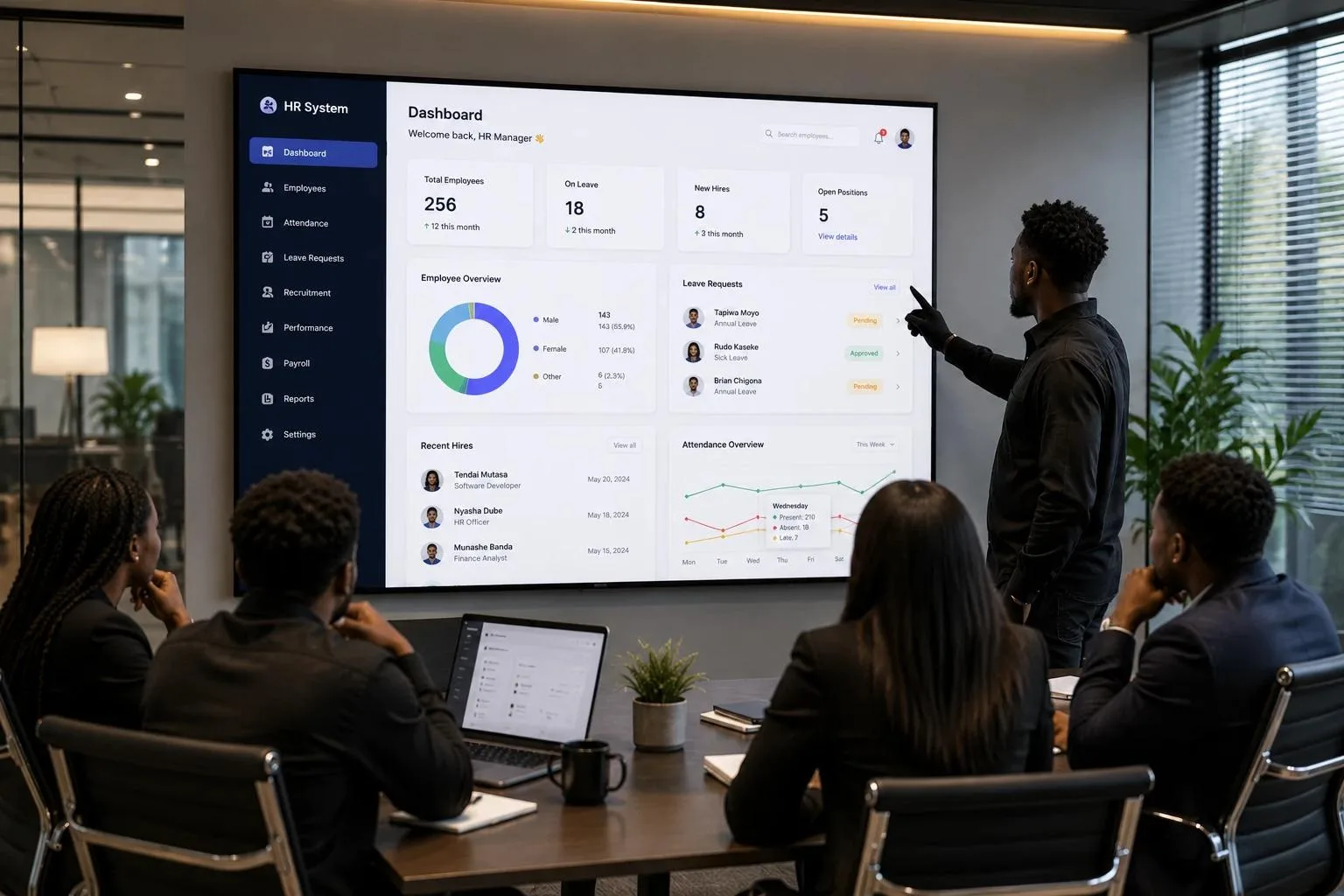
4. Employee Management Software
<Add an image showing an employee management dashboard>
Managing employee information manually becomes increasingly difficult as an organization grows.
Employee management software can help businesses organize:
Employee profiles.
Attendance records.
Leave applications.
Department management.
Employee responsibilities.
Payroll-related records.
Performance information.
The specific modules depend on the company's HR processes and requirements.
5. Custom Web Applications and SaaS Platforms
Some business ideas require solutions that do not fit into traditional software categories.
For example, an entrepreneur may want to develop a subscription-based platform where different businesses register, manage their accounts, and use shared services independently.
These solutions may require:
Multi-tenant architecture.
Subscription and billing management.
User and organization management.
Administrative dashboards.
API integrations.
Reporting and analytics.
Scalable database architecture.
Custom web applications and SaaS platforms are particularly useful for businesses developing digital products or introducing new technology-based services.
Custom Software vs Ready-Made Software: Which Should You Choose?
Before investing in software, it is important to understand the difference between purchasing an existing solution and developing a custom application.
Consideration | Ready-made software | Custom software |
|---|---|---|
Initial setup | Usually quicker | Requires planning and development |
Features | Predefined | Designed around your requirements |
Customization | Depends on provider | Greater control |
Business workflows | May require adjustments | Can match your processes |
Integrations | Depends on available options | Can be developed as required |
Ownership and control | Depends on licensing | Depends on your contract and agreement |
Scalability | Depends on provider | Can be planned around future needs |
Which option is better?
Ready-made software may be suitable when your business needs standard features and an existing application meets your requirements.
Custom software may be a better investment when your operations are unique, existing systems have important limitations, or you need greater control over functionality and future development.
The decision should be based on business value, not simply the initial development cost.
What Is Included in a Professional Software Development Project?
When requesting a software development quotation, it is important to understand what the proposed budget covers.
A professional project may include the following stages:
1. Requirements Analysis
Understanding your business, identifying challenges, defining objectives, and documenting the required features.
2. UI/UX Design
Planning the application's structure, designing interfaces, and creating a user-friendly experience.
3. Software Development
Building the frontend, backend, database, APIs, and required functionality.
4. Testing and Quality Assurance
Checking functionality, identifying errors, testing user permissions, and improving application reliability.
5. Deployment and Configuration
Preparing the production environment, configuring the application, connecting the domain where applicable, and deploying the system.
6. Training and Handover
Helping your team understand how to use the software and providing the agreed documentation and project deliverables.
7. Maintenance and Technical Support
Providing agreed updates, bug fixes, monitoring, and technical assistance after launch.
Not every quotation includes all these services. Always confirm what is included before approving a project.
Additional Costs Businesses Should Consider
Software development is not necessarily a one-time expense.
Depending on the project, businesses may also need to budget for:
Domain registration.
Cloud hosting or server infrastructure.
Database hosting.
Email and SMS services.
Payment gateway charges.
Third-party API subscriptions.
Data backups.
Ongoing maintenance.
Future feature development.
For example, an application may be completed and deployed successfully, but it will still require suitable hosting and ongoing maintenance to remain reliable.
Ask your development provider to distinguish between initial development costs and recurring operational expenses.
How to Choose the Right Software Development Company in Kigali
Choosing the right development partner is just as important as choosing the right technology.
Before selecting a company, consider the following:
1. Understand Their Technical Experience
Look for a development team that understands the technologies and architecture required for your project.
2. Review Previous Projects
Ask to see examples of applications, websites, or business systems they have developed.
3. Understand Their Development Process
A reliable provider should explain how requirements, design, development, testing, and deployment will be handled.
4. Ask About Project Documentation
Ensure that important technical documentation and agreed project deliverables will be provided.
5. Clarify Software Ownership
Discuss source code ownership, intellectual property, hosting accounts, third-party licenses, and access credentials in the project agreement.
6. Discuss Maintenance and Support
Understand how bugs, updates, technical issues, and future improvements will be handled after deployment.
7. Compare Value, Not Just Price
The cheapest quotation is not automatically the best option. Consider the quality of the solution, reliability, security, support, and long-term business value.
Why Work With BrightLink Technologies Ltd?
At BrightLink Technologies Ltd, we help businesses turn operational challenges and digital ideas into practical technology solutions.
Based in Kigali, Rwanda, we provide software development services focused on helping organizations improve their operations, manage information, and build scalable digital products.
Our software development services include:
Custom business management software.
Inventory and stock management systems.
Hotel management systems.
Property management systems.
Employee management systems.
Custom web applications.
SaaS platform development.
Business process automation.
We approach every project by first understanding the client's requirements and business objectives.
Rather than offering the same system to every customer, we work toward identifying the functionality, architecture, and development approach that best fit the project.
Whether you are a startup developing a new digital product, an established company improving internal operations, or an organization looking to automate business processes, BrightLink Technologies Ltd can help you explore the right solution.
How to Get a Custom Software Development Quotation
Getting started does not require you to have every technical detail figured out.
You can begin by explaining:
What your business does.
What problem you want the software to solve.
Who will use the system.
Which features you consider essential.
Whether you need a web application, mobile application, or both.
Whether the software needs to connect with existing systems.
Based on this information, the project requirements can be evaluated and a suitable development proposal prepared.
A clear scope helps establish realistic timelines, budgets, and deliverables.
Conclusion: Invest in Software That Supports Your Business Goals
Custom software development is an investment in how your business operates, serves customers, and prepares for future growth.
The right solution can help reduce repetitive work, organize important information, improve operational visibility, and create opportunities for better business performance.
However, successful software development starts with understanding the problem, defining the requirements, and choosing the right development partner.
If you are considering custom software development in Kigali, take the time to evaluate your needs and explore a solution that delivers real value.
Ready to build software for your business?
Contact BrightLink Technologies Ltd today to discuss your project and request a customized software development estimate.
BrightLink Technologies Ltd
Innovative Digital Solutions for Modern Businesses
Website: https://brightlinkltd.com
Email: brighttlink@gmail.com
Phone: +250 782 567 921 / +250 795 263 269
Let's turn your business ideas into practical digital solutions.